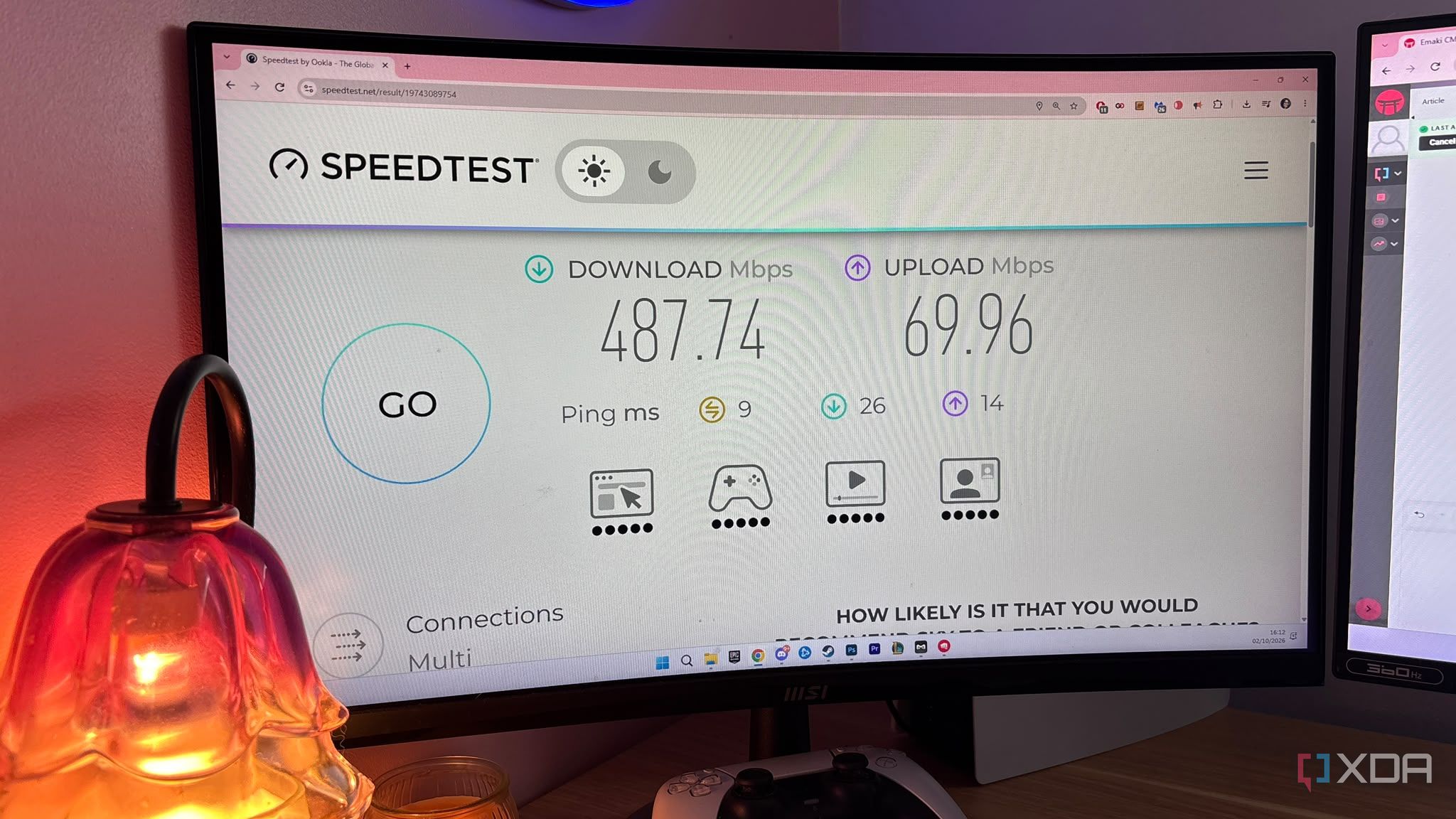
Upgrading to gigabit home broadband promises lightning-fast download speeds, but having access to that bandwidth does not guarantee your personal devices can actually take advantage of it. A recent report highlights a common reality check for consumers: paying for ultra-fast internet tiers only to discover that the hardware around their home creates immediate bottlenecks.
For mobile users, several factors hold back peak performance. While high-end Android flagships frequently support newer Wi-Fi standards, older smartphones, budget devices, and standard smart home accessories are often restricted by legacy network chips, limited antenna configurations, or standard router limitations. Physical distance, obstacles, and internal hardware constraints frequently reduce real-world speeds well below advertised maximums.
Additionally, most mobile services and app stores cap single-connection download rates on their servers, meaning a smartphone will rarely pull a full gigabit during daily tasks like streaming or updating apps. Unless a household has dozens of active devices demanding heavy bandwidth at the exact same time, much of the speed potential goes underutilized.
For the complete personal breakdown and testing details, check the original article on XDA Developers.